The Importance of Regular Eye Exams: More Than Just Vision
Many people believe that if they can see clearly, their eyes are healthy. However, vision is only one part of the story. According to the World Health Organization (WHO), a staggering 80% to 90% of all vision loss is preventable or treatable if caught early. Regular eye examinations are not just about updating your glasses; they are a vital “window” into your body’s overall health.
In Ghana, where conditions like glaucoma and cataracts are leading causes of avoidable blindness, a routine checkup at a professional eye clinic is one of the most cost-effective investments you can make in your life.
1. Detecting Silent Sight-Threateners
Most serious eye diseases do not have early symptoms. By the time you notice a “blur” or “shadow,” significant and sometimes irreversible damage may have already occurred.
Glaucoma: The “Silent Thief of Sight”
Glaucoma is the second leading cause of irreversible blindness globally. In Ghana, the prevalence is particularly high, affecting approximately 8.5% of people over the age of 40. Because it often has no pain and no early vision changes, regular eye exams are the only way to detect the increased eye pressure that damages the optic nerve.
Cataracts
Responsible for over 54% of blindness in Ghana, cataracts are the clouding of the eye’s natural lens. While common with age, early detection allows for modern, minimally invasive surgery that can restore vision to near-perfect levels.
Diabetic Retinopathy
As diabetes rates rise in West Africa, so does diabetic retinopathy. High blood sugar damages the tiny blood vessels in the retina. Eye exams can detect these changes—such as microaneurysms or small hemorrhages—long before a patient feels any symptoms.
2. A Window into Systemic Health
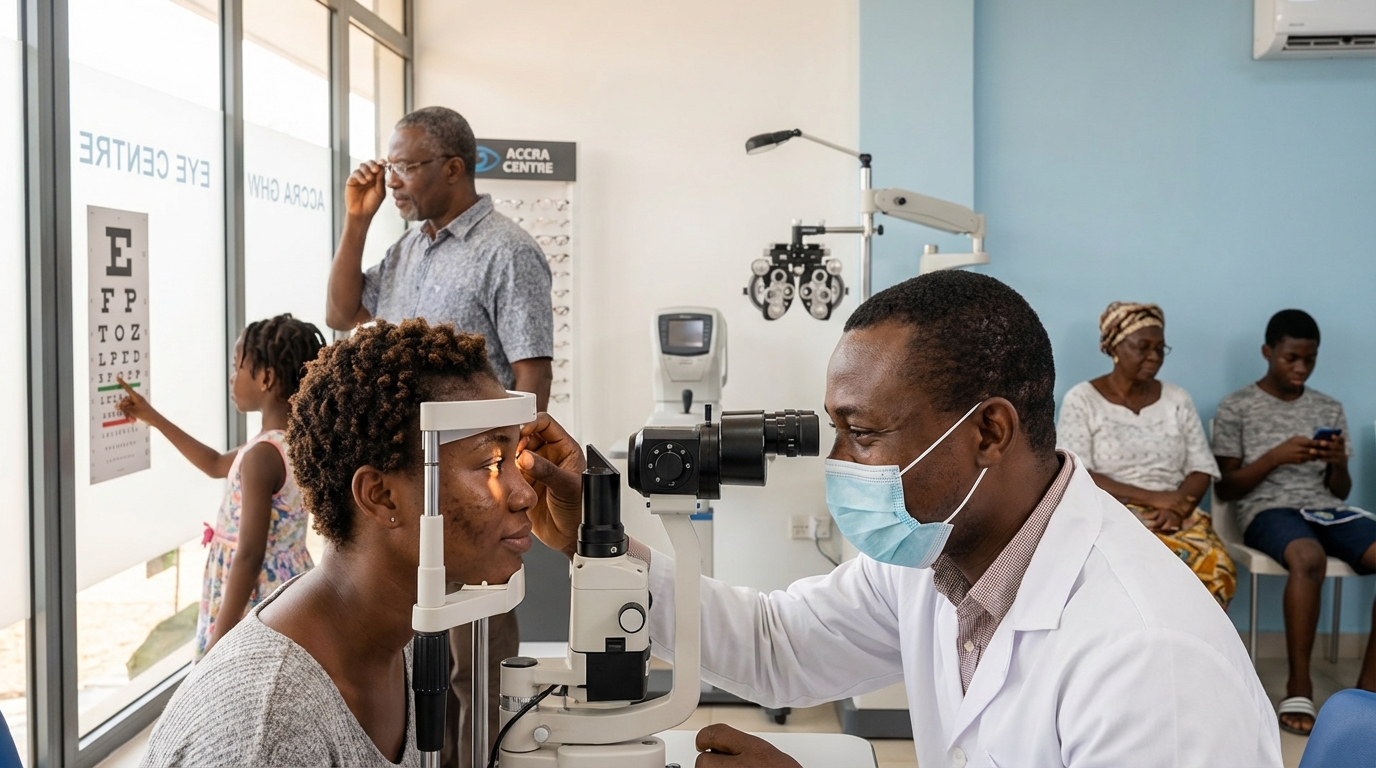
Your eyes are the only place in the body where a doctor can see live blood vessels and nerve tissue without surgery. Because of this, an eye exam can often detect chronic health conditions before a general physician does.
Research from the Human Capital Management Services (HCMS) group has shown that:
- 30% of hypertension (high blood pressure) cases are first identified during an eye exam.
- 20% of diabetes cases are first diagnosed by an eye care professional.
When your optometrist looks at your retina, they are looking for signs of “nicking” in the blood vessels (a sign of high blood pressure) or fluid leakage (a sign of diabetes). Detecting these conditions early can prevent heart attacks, strokes, and kidney failure.
3. The Economic Impact of Eye Care
The International Agency for the Prevention of Blindness (IAPB) highlights that investing in eye health provides one of the highest returns in the medical field.
- For every $1 invested in eye health in low- and middle-income countries, there is an economic return of up to $28 to $36.
- Restoring a person’s sight through cataract surgery can increase their economic productivity by up to 1500% within the first year.
For the individual, a routine eye exam prevents the loss of income associated with vision impairment and maintains the independence needed for daily Ghanaian life—from driving to work to caring for family.
4. How Often Should You Get Checked?
While your specific needs may vary, the general consensus for preventative care is:
- Children: A first exam at 6 months, again at age 3, and annually once they start school. Early detection of “lazy eye” (amblyopia) is critical before age 8.
- Adults (18-60): At least once every two years.
- High-Risk Individuals: If you have diabetes, hypertension, or a family history of glaucoma, an annual exam is mandatory.
- Seniors (60+): Annual exams to check for cataracts and age-related macular degeneration.
Conclusion: Don’t Wait for the Blur
Your eyes are replaceable, but your vision is not. In a country like Ghana, where the environment is harsh and hereditary risks are high, proactive eye care is essential.
Whether you are looking for an eye clinic in Kumasi or evaluating specialized care, remember that the most important appointment is the one you make before you think you need it.
Schedule your comprehensive eye exam at Perfect Vision Eye Care Clinic today. We don’t just test your vision; we protect your health.
Data Sources: World Health Organization (WHO) Global Report on Vision. IAPB - The Economic Impact of Vision Loss (2024). Ministry of Health (MoH) Ghana - Eye Health National Policy. HCMS Group - Research on Ocular Manifestations of Systemic Disease.